
Need to transform your organizational culture?
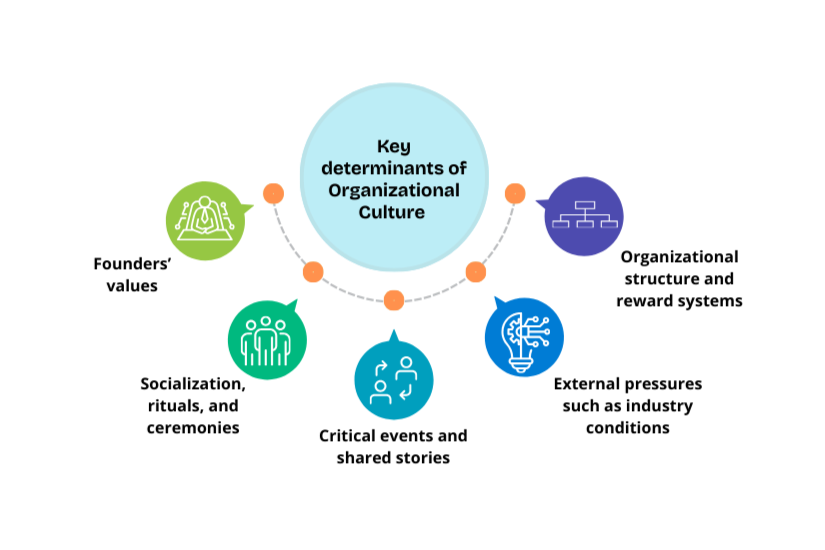
Determinants of Organizational Culture
Organizational culture reflects the shared beliefs, values, expectations, and norms that shape how people think, make decisions, and behave at work. It influences not only day-to-day actions but also how organizations respond to challenges, pursue opportunities, and execute strategy.
Culture does not form by accident. It develops over time through a combination of powerful forces, including founders’ values—often the single most influential factor—along with ceremonies and rituals, socialization processes, critical events and shared stories, external pressures such as industry conditions, and organizational structures and reward systems.
When an organization needs a cultural shift, the process must be approached strategically rather than symbolically. A critical first step is understanding which cultural determinants are realistically within leadership’s control. While not exhaustive, the following are some of the most well-established drivers of organizational culture.
Leadership Behavior and Role Modeling
Leaders shape culture most directly through their behavior. Daily decisions, visible actions, and trade-offs signal what truly matters far more powerfully than formal statements or value posters.Organizational Values and Strategic Intent
Culture strengthens when leaders clearly articulate core values and explicitly connect them to strategy, decision-making, and performance expectations throughout the organization.Interpretation of History and Organizational Narratives
Leaders influence culture by reframing organizational history—highlighting past events, stories, and lessons that reinforce behaviors aligned with the organization’s future direction.Structure and Decision Authority
Organizational structure and decision rights shape how people interact. Adjusting reporting lines, levels of decentralization, and accountability mechanisms can encourage communication, ownership, and behaviors consistent with the desired culture.Reward, Evaluation, and Promotion Systems
What gets rewarded gets repeated. Leaders reinforce culture by recognizing, promoting, and compensating behaviors that align with desired values while discouraging behaviors that undermine them.Hiring, Socialization, and Employee Exit (Attraction–Selection–Attrition)
Culture is sustained through who joins, how they are socialized, and who ultimately leaves. Hiring for alignment, intentional onboarding, and allowing persistent misalignment to exit are powerful cultural levers.
Organizational culture is one of the most valuable resources a firm possesses. Many Fortune 500 CEOs consistently cite culture as a key driver of long-term success. Understanding the sources of culture matters because it allows leaders to act intentionally when change is needed.
Leaders cannot change a founder’s influence, but they can clearly define and consistently model the values that guide future decisions. Leaders cannot rewrite organizational history, but they can reinterpret it—embedding new narratives through ceremonies, rituals, and everyday interactions. Culture can also be shaped by design: structural choices such as flatter or more decentralized forms can promote openness, communication, and empowerment when aligned with strategy.
Culture may feel deeply embedded and resistant to change, but it is not immutable. With clear strategic intent and sustained leadership action, organizations can deliberately reshape culture over time.
Culture does not change through slogans.
It changes through consistent choices, aligned systems, and repeated behaviors.
