
The real values of strategic frameworks is not that they give you answers, but that they expand your cognitive horizon.
Good frameworks help leaders step back and explore broader options and possibilities in strategic planning.
Once you’ve done the necessary research on your industry and taken an honest look at your firm’s capabilities, it’s time to make deliberate choices about future moves. Of course, this analysis should always be conducted with a clear understanding of your firm’s capabilities and the opportunities and threats in the market — not based on revenue potential alone.
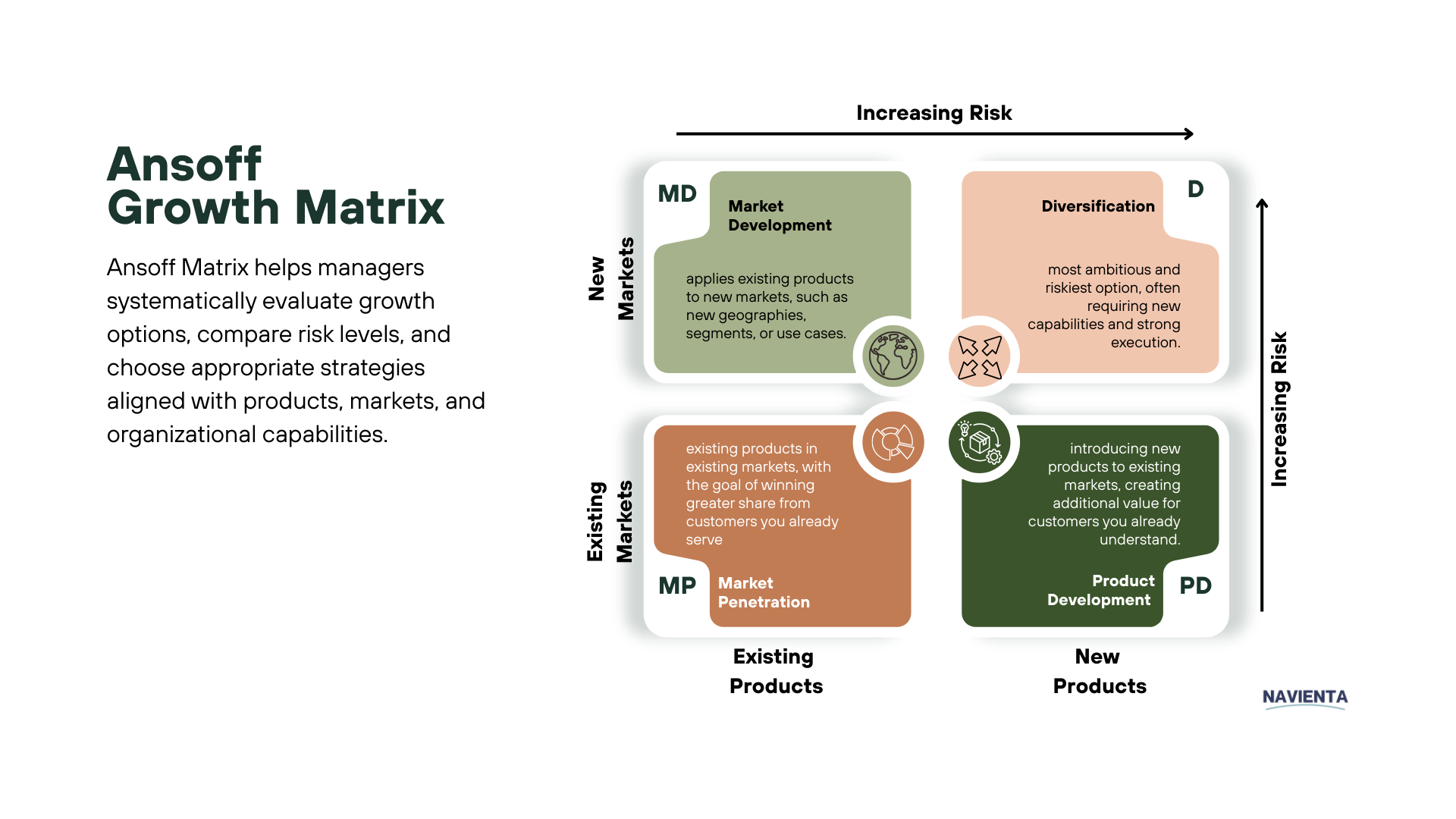
One of the tools I often use is the Ansoff Matrix (2×2 products × markets growth framework) for its clarity, simplicity, and strategic insight. The framework is built on two dimensions: existing versus new products, and existing versus new markets. Together, these dimensions outline four distinct growth paths.
1. Market penetration focuses on existing products in existing markets, with the goal of winning greater share from customers you already serve.
2. Product development involves introducing new products to existing markets, creating additional value for customers you already understand.
3. Market development applies existing products to new markets, such as new geographies, segments, or use cases.
4. Diversification combines new products and new markets. It is the most ambitious — and riskiest — option, often requiring new capabilities and strong execution.
In practice, frameworks like this are most useful when they help leaders structure conversations and make clearer strategic trade-offs.
